 CALL US NOW
 GET A FREE QUOTE

A desk with drawers full of files, a meeting table with loose legs and a cupboard packed with forgotten cables can turn a straightforward move into a delayed, expensive job. Knowing how to prepare office furniture for relocation helps protect your equipment, keeps staff productive and gives your removal team the access they need to work quickly.
For a small office, the preparation may take a day or two. For a larger workplace with multiple departments, specialist storage or heavy furniture, start planning several weeks ahead. The right approach depends on the size of your move, how far you are travelling and whether your new premises will be ready on time.
Start with a furniture and floor-plan check
Before anyone reaches for packing tape, walk through the office and make a clear record of what is moving. Include desks, chairs, filing cabinets, reception furniture, meeting room tables, shelving, lockers, kitchen units and any furniture stored in cupboards or off-site rooms. Take photographs of larger or unusual items, particularly if they have existing marks or damage.
Then compare your inventory with the floor plan for the new office. A boardroom table that fitted comfortably in your old space may not fit through the new doorway, into the lift or around a tight stairwell. Measure wide desks, cabinets and storage units, along with doorways, corridors and lift entrances at both properties. This avoids the unpleasant discovery that an item must be dismantled at the last minute.
It is also the right time to decide what genuinely needs to go. Relocation is an ideal opportunity to remove broken chairs, redundant filing, worn-out cupboards and surplus furniture that will only take up valuable space. Separating these items early makes loading more efficient and can reduce the size of vehicle required.
Create a realistic office move timetable
Give one person responsibility for coordinating the move, even if several team members are helping. They do not need to do every task themselves, but they should know who is responsible for packing, IT, keys, access arrangements and final checks.
Plan backwards from moving day. Confirm when staff must clear their desks, when IT equipment will be disconnected, when the new office can be accessed and when cleaning or clearance work needs to happen. If your business cannot afford much downtime, move non-essential furniture first and schedule workstations, phones and network equipment for the final stage.
Avoid assuming that Friday afternoon is always the easiest option. It can work well because staff have the weekend to settle in, but building access, lift bookings and loading restrictions may be tighter. A quieter weekday or an out-of-hours move can sometimes be the better choice.
How to prepare office furniture for relocation safely
Furniture should be emptied before it is moved wherever possible. Desks and cabinets become far heavier with files, stationery and personal belongings inside, and loose contents can damage drawers or cause items to tip. Ask each employee to clear their workstation by an agreed deadline and provide labelled crates or boxes for their belongings.
Filing cabinets need particular care. Remove files and either box them in order or use clearly numbered crates so they can be returned quickly. If a cabinet must be moved with contents still inside, only do so after checking that it is designed for this and that a professional mover is happy to handle it. Never leave drawers unlocked, as they can slide open during lifting or transit.
Dismantle furniture only when it is necessary for safe access or transport. Flat-pack desks, large conference tables, modular storage and tall shelving are often easier to move in sections. However, over-dismantling can create extra work and increases the chance of losing fittings. Keep screws, bolts, brackets and fixings for each item in a sealed bag, label it clearly and tape it securely to the relevant furniture piece where appropriate.
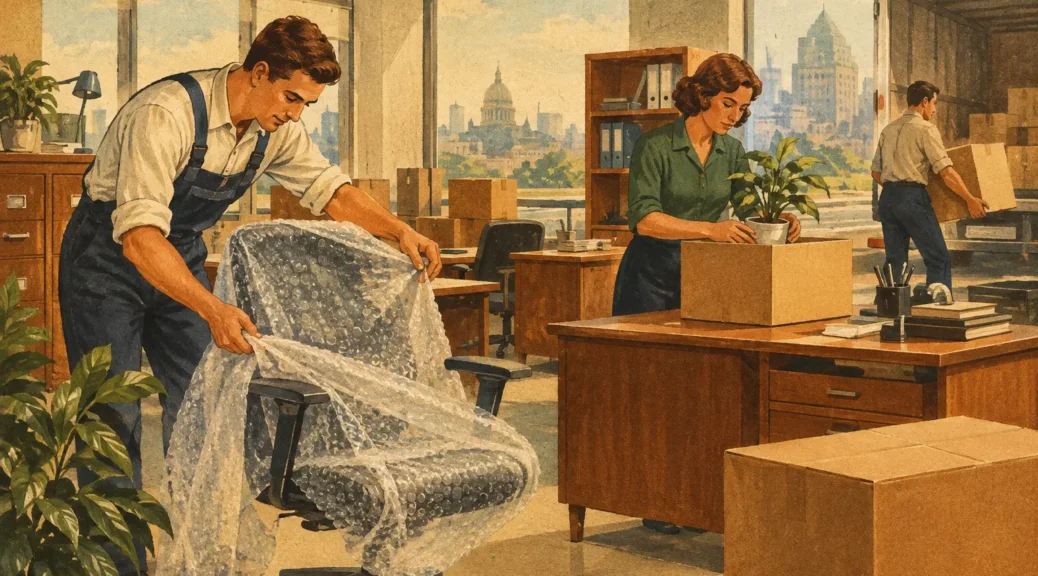
Protect corners, glass panels and finished surfaces with furniture blankets, protective wrap or cardboard. Tape should not be placed directly on polished wood, painted surfaces or upholstery, as it can leave residue or lift the finish. Glass table tops and display cabinets should be wrapped separately, labelled as fragile and kept upright where the item allows.
Label by destination, not just by department
A label reading “Marketing” is useful, but it does not tell a mover where to place an item. Add the new room, floor or zone to every crate and furniture label. For example: “Marketing – First Floor – Workstation 12” gives everyone a clear destination without needing instructions at the door.
Use a simple colour system if your office has several rooms. Place matching coloured labels near the relevant doors at the new premises so furniture, crates and chairs can be directed quickly. Numbering desks and matching their equipment can also prevent staff spending the first morning searching for the correct chair, pedestal or monitor stand.
Keep an inventory sheet for higher-value items, including monitors, ergonomic chairs, projectors, printers and secure storage. Record serial numbers where relevant. This is particularly useful if equipment is being moved in stages or temporarily placed in storage.
Separate IT equipment from furniture planning
Office furniture and IT are closely connected, but they should not be treated as the same task. Desks may be ready to move while monitors, dock stations, routers and cables still need careful disconnection. Arrange for your IT provider or a competent member of staff to back up essential data, photograph cable connections and label every lead before anything is unplugged.
Each workstation should have a labelled bag or box for its cables, keyboard, mouse, power leads and small accessories. Do not tape cables directly to monitors or leave them loose in drawers. Use original boxes for screens where available, or pack them upright with proper protection. Printers and multifunction machines may need manufacturer-specific preparation, especially if they contain toner, ink or moving internal parts.
At the new office, make sure desk positions, power sockets, data points and Wi-Fi arrangements have been checked before the furniture arrives. Moving desks twice because a network point is in the wrong place wastes time and risks damage.
Make access easy for the removal team
A well-packed office can still lose hours if the route in and out is blocked. Reserve loading bays, arrange parking permissions, book lifts and tell building management about the move in advance. Check whether there are height restrictions, timed delivery slots or rules about using communal corridors.
Clear walkways, remove trip hazards and keep staff away from active loading areas. Identify which furniture is staying, which is being moved and which is being cleared so there is no confusion on the day. A final walk-through with your move coordinator and removal team is worthwhile before loading begins.
For bulky desks, safes, large cabinets or awkward meeting-room furniture, provide accurate dimensions and photographs when requesting a quote. This allows the removal company to send suitable staff, equipment and vehicle space rather than making assumptions that cause delays.
Combine removal, clearance and cleaning where it helps
An office move often creates jobs beyond transport. Old furniture may need removing, unwanted paperwork may require secure handling and the outgoing premises may need a thorough clean before handover. Booking these separately can mean several appointments, repeated site visits and more pressure on your team.
Vantage 24/7 Services can coordinate office removals alongside clearance and commercial cleaning across Cambridge and wider Cambridgeshire, helping businesses use one dependable point of contact. Bundling the work can be especially useful when a lease end date is close, although the best option depends on what your landlord requires and whether items can be reused, donated or disposed of responsibly.
Do not leave clearance decisions until moving day. Anything unwanted should be clearly marked and kept apart from furniture that is travelling to the new office. That simple separation prevents costly mistakes and helps the removal team focus on loading the right items first.
Final checks before the doors close
On the day before your move, inspect every desk, cupboard, meeting room and kitchen area. Check that drawers are empty and locked, furniture has been labelled, fixings are bagged, confidential documents are secure and essential keys, passes and alarm details are with the right people.
Keep one small essentials box with the items needed to get operating again: keys, access cards, chargers, first-aid supplies, kettle supplies, cleaning cloths, basic tools and the contact details for the building manager. Take it with a named person rather than loading it into the main vehicle.
A calm office move is rarely about doing everything at once. It comes from making clear decisions early, protecting what matters and giving every item a destination before it leaves the building.