
 CALL US NOW
 GET A FREE QUOTE

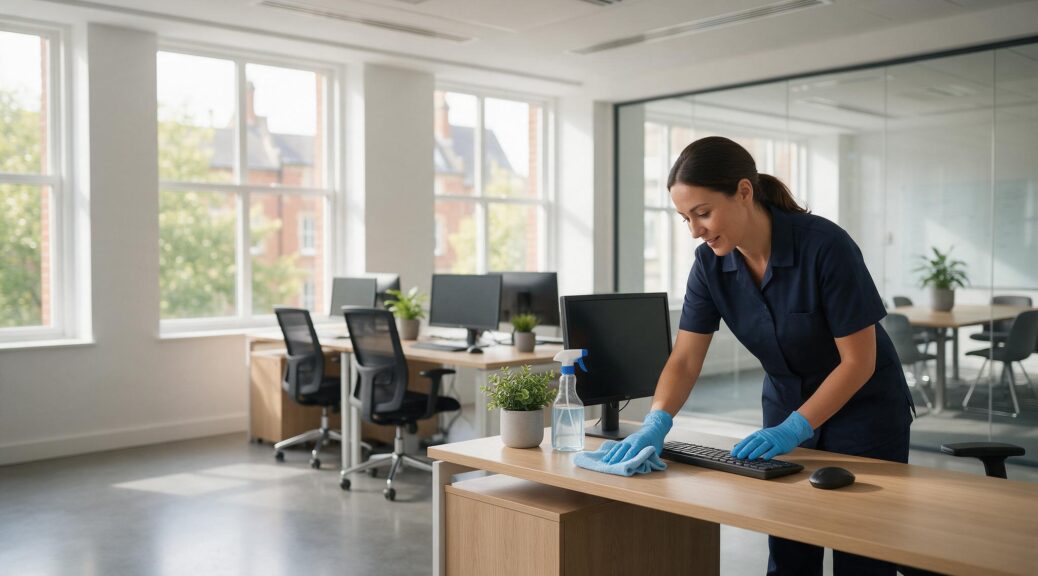
Most Cambridge offices benefit from professional cleaning two to five times a week, while busy workplaces with regular visitors, shared kitchens or high washroom use often need daily cleaning. The right schedule depends on how the office is used, not simply its size.
There is no single cleaning frequency that suits every workplace. A small office with few staff may need fewer visits, while a busy office with client meetings, shared equipment and regular footfall will usually need more frequent attention. A professional cleaning contractor should assess the premises, staff numbers, working patterns and communal areas before agreeing a schedule.
What determines cleaning frequency?
Office cleaning frequency should be based on occupancy, visitor numbers, shared facilities and the standard your business wants to maintain. Review the schedule regularly as working patterns change.
The main factors that affect how often an office should be cleaned include:
The number of employees using the space.
How often clients, suppliers or members of the public visit.
Whether staff use a shared kitchen, break room or refreshment area.
How heavily washrooms are used.
Whether staff share desks, equipment or meeting rooms.
The type of flooring and the amount of foot traffic.
Whether the office is client-facing or mainly used by staff.
Industry guidance commonly places standard office cleaning at two to five visits per week, with daily cleaning more suitable for high-traffic, customer-facing or multi-user workplaces. For a hybrid-working office with moderate occupancy, some providers suggest around three to four professional visits each week, while still maintaining daily attention to washrooms and kitchens.
What should be cleaned daily?
Washrooms, kitchens, entrances, bins and high-touch shared surfaces should generally receive attention every working day. These areas show dirt and wear quickly and are used by many people.
For an active office, daily cleaning should normally include:
Washrooms and toilets.
Kitchen and break-room surfaces.
Bins and waste areas.
Entrance mats, reception areas and doorways.
Door handles, lift buttons and light switches.
Shared printers, kitchen appliances and meeting-room equipment.
Any visibly dirty floors or surfaces.
High-touch surfaces such as door handles, keyboards, shared equipment and lift buttons need regular sanitising, particularly in offices with frequent visitors or shared workstations. Washrooms and kitchens should be cleaned daily as a minimum; in busy offices, they may need attention more than once each day.
How often should different areas be cleaned?
A practical office cleaning plan combines daily essential tasks with weekly, monthly and periodic deep cleaning. The exact balance depends on footfall and how each area is used.
For a standard office, once-daily cleaning is often treated as a minimum baseline, while offices with more than around 30 people or regular external visitors may need twice-daily attention in key areas. A professional deep clean every three to six months is commonly recommended to address areas that routine cleaning does not fully cover.
Does office size matter?
Yes, but the number of people using the office matters more than floor space alone. A larger office with few staff may need less frequent cleaning than a small office with high visitor traffic.
A compact office with a handful of employees and limited visitors may work well with one or two professional cleaning visits each week, supported by staff keeping personal areas tidy. By contrast, a larger office with busy washrooms, a staff kitchen, regular meetings and visitors is more likely to need daily service.
When arranging a cleaning specification, provide accurate information about:
The number of employees and usual occupancy.
The number of desks, meeting rooms and washrooms.
Whether clients or visitors use the premises.
Kitchen and refreshment arrangements.
Opening hours and access times.
Any areas requiring restricted access or specialist cleaning.
This helps the cleaning company allocate enough time to complete the agreed specification properly.
Should Cambridge offices have a deep clean?
Yes. Routine cleaning maintains day-to-day standards, while a periodic deep clean addresses built-up dust, dirt and areas that are not part of a normal cleaning visit.
A deep clean is useful after a busy period, before an important client visit, following refurbishment work, or when an office has been neglected. It may include detailed cleaning of carpets, upholstery, internal windows, vents, high-level surfaces and hard-to-reach areas.
For most offices, a professional deep clean every three to six months is a sensible baseline. Offices with high footfall, regular catering, frequent visitors or recent staff illness may benefit from arranging one closer to every three months.
How can you create the right schedule?
Start with a written cleaning specification, review it after a few weeks and adjust it as your workplace changes. The best schedule reflects how the office is actually used.
A practical approach is to divide the office into zones:
Daily zones: Washrooms, kitchen, entrance, bins and high-touch areas.
Weekly zones: Desks, floors, meeting rooms and communal areas.
Periodic zones: Windows, vents, upholstery, carpets and deep-clean tasks.
Review the plan every few months, particularly if your team grows, hybrid working changes, visitor numbers increase or you add a kitchen or meeting space. A flexible contract makes it easier to increase or reduce cleaning visits without disrupting the workplace.
FAQs
How often should a small office be professionally cleaned?
A small office with light footfall may work well with weekly or twice-weekly professional cleaning, provided staff maintain basic tidiness between visits.
Do busy offices need daily cleaning?
Many do. Offices with frequent visitors, shared kitchens, active washrooms or customer-facing areas commonly need daily cleaning, particularly for high-touch surfaces and communal areas.spotlesscambridge+1
How often should office washrooms be cleaned?
An active office washroom should normally be cleaned at least once every working day. Busy offices may need twice-daily cleaning.
How often should an office be deep cleaned?
A professional deep clean every three to six months is a common baseline. Consider more frequent deep cleaning if the office has high footfall, regular catering or recent illness among staff.
Can cleaning be done outside working hours?
Yes. Many offices arrange cleaning before staff arrive, after they leave, or at weekends to reduce disruption. Agree access arrangements, alarm procedures and preferred timings with the cleaning provider in advance.
How do we get started?
List the areas that need cleaning, your preferred schedule and any site-specific requirements. Then request a site assessment and a written cleaning plan for your Cambridge office.