
 CALL US NOW
 GET A FREE QUOTE

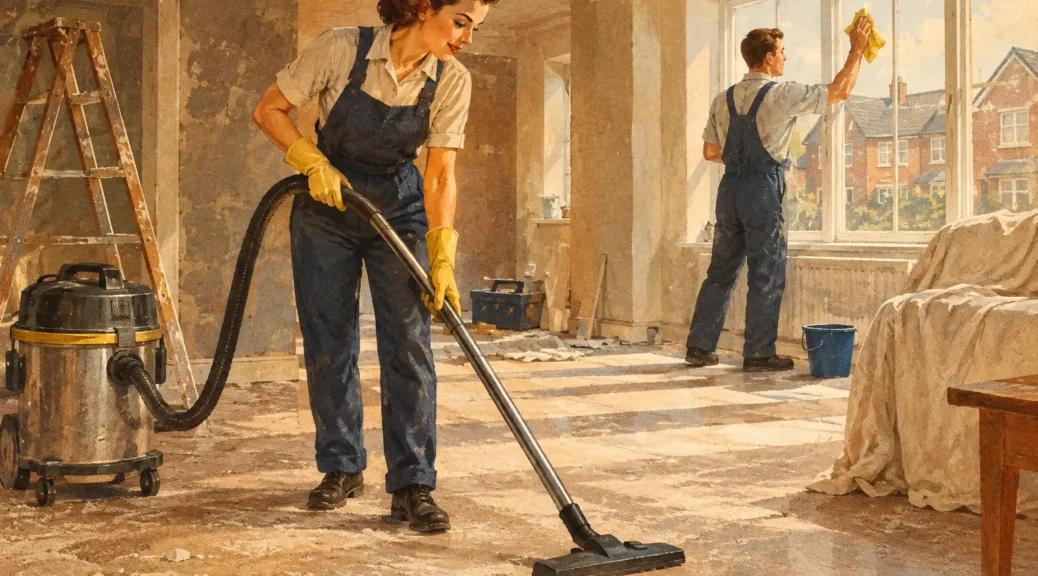
A building job can look finished long before the property is ready to live or work in. Fine dust settles inside cupboards, on skirting boards and across freshly fitted surfaces, while paint splashes, grout haze and leftover packaging can make a new space feel unfinished. Deep cleaning after builders work is the step that turns a completed project into a clean, usable property.
Whether you have renovated a kitchen, converted an office, fitted a new bathroom or completed repairs before moving out, the clean-up is rarely a quick wipe-down. It needs the right order, suitable products and enough time to deal with the details without damaging newly installed finishes.
Why builders’ dust needs proper attention
The dust left after construction, decorating, plastering, sanding or cutting is much finer than everyday household dust. It travels through open doorways, vents and cupboards, then settles again after it has been disturbed. Cleaning only the visible surfaces can leave a grey film on floors, window ledges, radiators and inside storage units within hours.
A proper post-build clean starts high and works down. Ceilings, light fittings, walls, frames and vents are tackled before worktops, fixtures and floors. This stops dust from being moved back onto areas that have already been cleaned. Vacuuming should be carried out carefully, including edges and corners, before floors receive a damp clean appropriate to the material.
There is also a practical safety point. Dust can irritate eyes and airways, particularly where plaster, masonry or wood has been sanded. Where a project has created a large volume of dust, avoid dry sweeping, which simply sends more particles into the air. A professional team will use suitable equipment and methods to contain and remove it properly.
What deep cleaning after builders work should cover
Every project is different. A one-room redecoration needs less work than a full refurbishment, and a property that has been protected well during works may only need a detailed finishing clean. The best approach is to assess what has actually been left behind rather than paying for tasks that are not needed.
A thorough clean normally includes the removal of dust from accessible surfaces, doors, skirting boards, switches, sockets, radiators and internal windows. Kitchens and bathrooms need closer attention because new units, tiles and fittings often hold dust in gaps, drawers, cabinets and protective films. Appliances, if they were installed as part of the work, may also need cleaning inside and out before use.
Flooring deserves particular care. Builders’ dust can be abrasive, so rubbing it across wood, vinyl or polished stone can cause marks. Newly laid floors may have manufacturer guidance on how soon they can be washed and which products are safe. Carpeted areas may need a detailed vacuum first, followed by carpet cleaning if dust, footprints or stains have become embedded.
Window cleaning can be another separate job. Glass may have paint marks, silicone residue, labels or plaster specks, but aggressive scraping is not always suitable. Tough residue should be tested and removed with care, especially on coated glass, fresh frames and newly fitted doors.
The details people often miss
The visible mess usually gets dealt with first. The areas that cause frustration later are the small ones: the top of door frames, extractor covers, inside drawers, behind toilets, under radiators and along the edges of newly fitted cupboards. Dust also collects around hinges, handles and window tracks, where it can make an otherwise spotless room feel gritty.
Protective coverings are another common issue. Film on appliances, labels on windows and cardboard around fittings should be removed only when the work is genuinely complete and the installer has not asked for anything to remain in place. Check for snagging first. It is easier to spot a chipped tile, scratched worktop or poor paint finish before the room is fully dressed with furniture.
Outside, the entrance can tell a different story from the newly finished interior. Builders may have tracked mud through a hallway, left dust on paths or placed bags of waste near the property. If the job includes a move-in, clearance or handover, arranging waste removal and a final clean together can save time and prevent several separate appointments.
When to book the clean
The best time for deep cleaning after builders work is after all trades have finished, waste has been removed and any snagging has been completed. Booking too early can mean cleaners have to return after another contractor creates fresh dust, paint marks or footprints.
For larger projects, it can be sensible to plan two stages. The first is a builders’ clean once the heavy work is over, making the space safe and presentable for inspections or final fitting. The second is a lighter sparkle clean after the last minor jobs, deliveries and furniture installation. This can be especially useful for landlords preparing a rental property or businesses reopening an office.
If you are moving in immediately, allow enough time between the builders leaving and the removal team arriving. A clean, empty property is faster to work through and allows full access to floors, cabinets and every room. Once boxes and furniture are in place, cleaning takes longer and some areas become inaccessible.
Can you do it yourself?
For a small decorating job, yes – provided you have the time, equipment and confidence to clean the surfaces safely. Start with ventilation where appropriate, use a vacuum with good filtration, clean from high to low, and change cloths regularly rather than spreading dust around. Always check cleaning instructions for new flooring, stone, paintwork and appliances.
For a larger renovation, a professional clean is often better value than it first appears. It can take a household several long days to remove fine dust from every room, particularly when they are also packing, arranging a move or dealing with contractors. A trained team brings the equipment, products and labour needed to get through the work efficiently.
There are limits to any cleaning service, so be clear about the condition of the site. Heavy rubble, timber, plasterboard, paint tins and trade waste usually need a waste removal service rather than being included in a cleaning visit. Likewise, damage, permanent staining or unfinished building work cannot be cleaned away. Clear photos and an honest description help produce an accurate quote and prevent surprises on the day.
Make the handover easier with one provider
A post-build clean often sits alongside other jobs: removing builders’ waste, clearing old furniture, collecting unwanted packaging, cleaning carpets or preparing a property for new tenants. Coordinating separate companies can slow everything down, particularly when access is limited or the deadline is close.
Vantage 24/7 Services can combine deep cleaning, waste removal, house clearance, carpet cleaning and moving support into one practical plan across Cambridge and wider Cambridgeshire. This is useful when a renovation is part of a house move, tenancy changeover or office refresh. Booking related services together can also make scheduling simpler and may offer better value than arranging each job individually.
To get the right level of cleaning, provide the number of rooms, the type of building work completed, whether the property is empty, and any issues such as paint splashes, adhesive residue or heavily dusty carpets. Photos are particularly helpful for larger jobs. A clear & competitive quote should reflect the actual condition of the property, not a vague assumption about how much cleaning may be needed.
A finished renovation should feel exciting, not like another long list of jobs. Leave the dust, residue and final clear-out to a capable team, then walk into a property that is ready for furniture, tenants, staff or family life.