
 CALL US NOW
 GET A FREE QUOTE

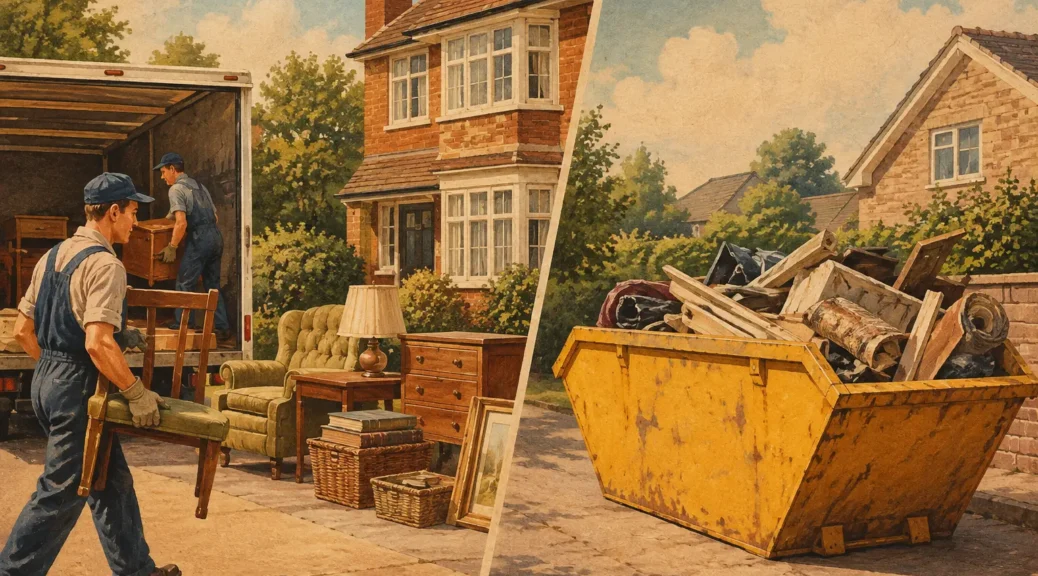
A full garage, an inherited property, bags left after a tenancy or the final clear-out before moving can create the same question: house clearance or skip hire? Both can remove unwanted items, but they solve very different problems. The right choice comes down to how much work you can take on, what you need removed, where the waste is located and how quickly the property needs to be ready.
For many households and landlords, the cheapest-looking option is not always the easiest or best value. A skip gives you somewhere to put waste. A clearance team does the lifting, loading and disposal for you. When time is tight, access is difficult or there is more than a few bags of rubbish involved, that difference matters.
House clearance or skip hire: the main difference
Skip hire is a container delivered to your drive, front garden or an approved roadside location. You fill it over an agreed hire period, then the provider collects it. It is a practical option when you are doing a renovation, landscaping a garden or clearing items gradually over several days.
House clearance is a labour-led service. A team comes to the property, removes the agreed items from rooms, lofts, sheds, garages or gardens, loads a vehicle and takes them away for appropriate disposal. It is usually the better fit when you want the job finished in one visit without carrying furniture, black bags or broken-down items outside yourself.
Neither option is automatically right for every job. The useful question is not simply, “Which costs less?” It is, “What will it take to get this property clear safely, legally and on time?”
When skip hire makes sense
A skip can be a sensible choice if you have space for it and are happy to do the loading. It works particularly well for ongoing work where waste is created bit by bit, such as a bathroom refit, decorating project or garden overhaul. You can fill it at your own pace rather than arranging a fixed clearance appointment.
It can also suit properties with mostly loose, non-hazardous waste. Old timber, packaging, soil, rubble and broken fixtures are often easier to place in a skip than to sort into a series of separate collections.
There are limits, though. Skips are rarely ideal for a mixed house full of furniture, electricals, mattresses, bags, personal belongings and awkward items stored upstairs. You still need to carry every item to the skip, keep it within the fill line and make sure nothing prohibited goes in. Depending on the provider, items such as paint, tyres, gas bottles, batteries, fridges and other electrical equipment may need separate arrangements.
If the skip must sit on a public road, you may need a permit from the local authority. That can add cost, notice time and administration. A skip outside the property can also take up valuable parking, create a loading obstacle and attract fly-tipping from other people.
When a house clearance is the easier answer
House clearance is designed for the jobs that feel too large, too physical or too urgent to manage alone. Think of a property after bereavement, a tenant moving out, a house sale, a student flat at the end of term or a landlord preparing for new occupants. The task is often not just removing rubbish. It is clearing bulky belongings from several rooms and making the space usable again.
With a professional clearance, you do not need to hire a skip, move heavy wardrobes through the house or spend a weekend making repeated trips to the tip. A team can work through the agreed areas, remove items from where they are and leave the property much clearer in a fraction of the time.
This is especially useful where access is awkward. Narrow staircases, upper-floor flats, long garden paths and properties without a driveway can make skip loading a much bigger job than expected. A clearance team brings the labour and vehicle capacity needed to deal with the practical side.
For landlords and letting agents, speed is often the deciding factor. An empty property may need waste removed, carpets cleaned and an end of tenancy clean completed before viewings or new keys are handed over. Booking separate companies can slow everything down. A one-stop provider can coordinate the clearance and cleaning work in the right order, helping reduce downtime between tenancies.
Compare the real cost, not just the quote
Skip prices can look straightforward, but the final cost may depend on skip size, hire length, permits, location and the type of waste being disposed of. Choosing a skip that is too small can mean hiring another one. Choosing one that is too large means paying for unused capacity.
A house clearance quote is usually based on the volume and type of items, the number of people needed, access, parking and any specialist disposal requirements. It may appear more expensive than the headline price of a skip, but it includes the labour that many people underestimate.
Consider what your own time is worth. Clearing a three-bedroom house can involve dozens of trips up and down stairs, dismantling furniture, arranging help and finding a legal way to dispose of items that cannot go into a skip. If you are moving home, managing probate or preparing a rental property, the convenience of having the work completed for you can represent better value.
The best way to get an accurate comparison is to be clear about the job. Share photographs where possible, say which rooms need clearing, point out large or heavy items, and mention access restrictions. A clear and competitive quote should explain what is included so there are no surprises on the day.
Waste rules can change the decision
It is tempting to treat all unwanted belongings as rubbish, but disposal rules matter. Household waste, commercial waste, electrical goods, mattresses, upholstered furniture and hazardous materials may all require different handling. A reputable provider should be able to explain what they can remove and what needs a separate arrangement.
If you use a clearance company, check that your waste is being handled responsibly. Unlicensed disposal can leave you exposed if your belongings are fly-tipped. Keep your booking details and ask questions if you are unsure about a particular item.
The same care applies to a skip. Do not assume that everything can be thrown in together. Before it arrives, ask about restricted items and avoid filling it with waste that the provider has not agreed to take. This small check can prevent collection delays and extra charges.
A practical choice for common property situations
For a renovation with a steady flow of rubble and materials, skip hire is often the practical route. You control the pace and can keep adding waste while the work continues.
For a whole-house clear-out, a bereavement clearance or a tenancy where furniture and bags are spread throughout the property, a clearance service is normally less stressful. The team handles the lifting, loading and removal, so you can focus on decisions that only you can make.
For a move, think about what happens before and after the removal van arrives. Clearing unwanted items before moving reduces the volume you pay to transport. If the old property also needs a deep clean, carpet clean or garden tidy, combining services can save time and avoid the hassle of arranging several suppliers.
For a landlord facing a short turnaround, house clearance is often the fastest route to a presentable property. Once the items are removed, cleaning can begin straight away rather than waiting for a skip to be delivered, filled and collected.
How to make your clearance day run smoothly
Before booking, set aside anything you want to keep, including paperwork, keys, jewellery, photographs and sentimental items. This is particularly important for inherited properties or homes that have been occupied for many years. Once the clearance team starts, it helps to have one person available to confirm what stays and what goes.
Make access as straightforward as possible. Reserve parking if you can, let the team know about stairs or tight entrances, and tell them in advance if there are very heavy items such as pianos, safes or large American-style fridge freezers. Honest information allows the right people, vehicle and equipment to be arranged from the outset.
If you need more than removal alone, say so when requesting your quote. Vantage 24/7 Services can combine house clearance with removals, waste removal, end of tenancy cleaning, deep cleaning, carpet cleaning and garden clearance across Cambridgeshire, helping you arrange the job through one reliable point of contact.
A clear property gives you room to move forward, whether that means handing back the keys, welcoming new tenants or starting fresh in your next home. Choose the option that removes the workload as well as the waste – and ask for a tailored quote before the clutter becomes another job on your list.