
 CALL US NOW
 GET A FREE QUOTE

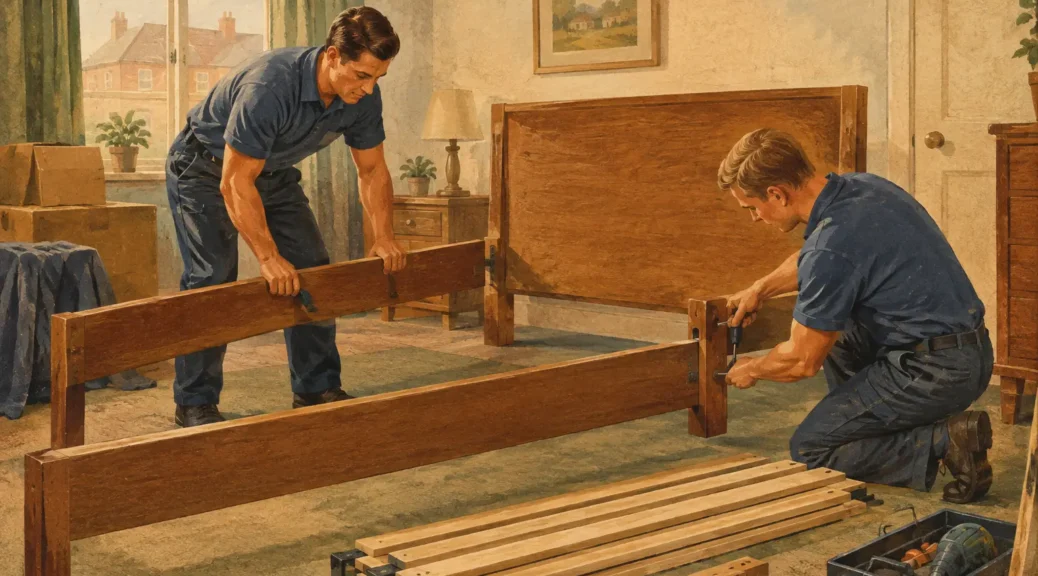
A bed frame that will not fit through the stairwell can turn an otherwise straightforward move into a long, frustrating delay. So, do movers dismantle beds? Often, yes – but it is not something to assume is included with every removal booking. The answer depends on the type of bed, the service you have booked and whether the work was agreed before moving day.
For a smooth move, tell your removal company about every bed that needs taking apart when you request your quote. A reliable team can then allow the right time, tools and number of movers, rather than discovering a heavy ottoman frame or complicated bunk bed at the last minute.
Do movers dismantle beds as part of a removal?
Many professional removal teams can dismantle standard bed frames and reassemble them at your new property. This commonly includes simple wooden or metal frames, divan bases with detachable headboards, and beds that cannot safely pass through doorways or around landings while assembled.
However, dismantling is usually an additional service or a detail that must be included in the original quote. Some man and van services are priced mainly for loading, transport and unloading. They may be happy to move a bed already taken apart, but may not carry tools, spare fixings or have enough time in a tightly scheduled booking to dismantle it for you.
The practical rule is simple: do not rely on a verbal assumption. Ask, “Will you dismantle and reassemble my beds, and is this included in the price?” Get the answer confirmed with your booking details.
What type of beds are movers likely to dismantle?
A standard double or king-size frame is usually straightforward when its fittings are accessible and it is in good condition. But not all beds are equal, and the size, design and condition of the furniture matter.
Straightforward frames
Basic slatted frames, metal frames and divans with bolt-on headboards are normally the simplest jobs. Once the mattress is removed, a trained team can usually take the frame down quickly, protect the pieces and load them safely.
If the frame has wooden slats, these should be bundled or secured so they do not bend, snap or disappear among boxes. Side rails, headboards and footboards should also be protected from knocks, particularly if they have painted, upholstered or polished finishes.
Ottoman, storage and electric beds
Ottoman beds need extra care. Their lifting mechanisms are heavy, spring-loaded and can cause injury or damage if handled incorrectly. Some designs must be dismantled in a specific order, while others are best moved in larger sections. Tell the removal company if you have an ottoman bed and, if possible, share a photograph when asking for a quote.
Electric adjustable beds also need specialist attention. The motors, control cables and articulated sections must be disconnected and packed carefully. It is sensible to keep remote controls, instructions and any power leads in a labelled bag that travels with you rather than in the removals vehicle.
Bunk beds, cabin beds and bespoke furniture
Children’s bunk beds, cabin beds and high sleepers are more time-consuming because they often have ladders, guard rails, built-in desks, shelving or drawers. Bespoke frames can be even more complicated, especially where they have been built into an alcove or assembled in a room with limited access.
Movers can often help, but these are exactly the items that need to be declared in advance. A team may need more time, additional protective materials or a second pair of hands. If the bed is fixed to a wall, the company should also know whether you expect the fixings to be removed and whether any minor making-good work will be needed afterwards.
When bed dismantling may not be included
Removal companies vary, so it is worth checking the boundaries of the service. Dismantling may not be included where a bed is unusually complex, damaged, unsafe or missing its original fittings. The same applies if a customer books a short man and van slot and only mentions the bed when the team arrives.
There can also be a difference between dismantling and reassembly. A team may take a frame apart to get it out of your old home, but reassembly at the new property could take longer if rooms are still full of boxes, access is restricted or parts have not been kept together. Confirm both sides of the job before the move.
Flat-pack furniture brings another consideration. A wardrobe or bed that has been assembled and dismantled several times can weaken around screw holes, dowels and chipboard joints. Even careful movers cannot guarantee that fragile, worn furniture will go back together perfectly. In some cases, moving it as a protected whole is safer if access allows. In others, replacement may be more sensible than paying for a difficult dismantle and rebuild.
How to prepare your bed before the movers arrive
A little preparation makes bed dismantling faster and helps protect the frame. Strip all bedding, remove mattresses where possible and empty under-bed drawers. Clear the route from the bedroom to the front door, including shoes, laundry baskets and small furniture on landings.
If you still have the assembly instructions, put them aside for the team. They are especially useful for ottoman, cabin and flat-pack beds. You do not need to take the bed apart yourself unless you have agreed to do so, but do point out any loose joints, hidden screws, previous repairs or parts that need special handling.
Keep any screws, bolts, brackets and small fittings together in a labelled bag. A professional team will normally do this as part of the job, but the label matters when several items are being dismantled at once. Write the room and item on it, such as “main bedroom – oak bed frame”. Tape the bag securely to the relevant frame part where appropriate, or keep it with your essential items.
Mattresses need planning too. They should be clean and dry before loading, and mattress protectors are a worthwhile safeguard against dirt and tears. Never fold a mattress unless the manufacturer says it can be folded. Pocket-sprung, memory foam and hybrid mattresses can be damaged or permanently misshapen by bending.
Questions to ask before you book
A clear quote is more useful than the cheapest headline price. When speaking to a removal company, explain how many beds you have, their sizes and whether they need dismantling, reassembly or both. Mention difficult access, such as narrow stairs, a top-floor flat, tight parking or a property without a lift.
It is also worth asking whether the team supplies tools and protective covers, how fittings are labelled, and whether there is a separate charge for assembly work. If you have an antique, designer or expensive upholstered bed, ask how it will be protected and whether there are any limits on liability for pre-existing damage.
Photographs can prevent misunderstandings. A few clear pictures of the bed, its fixings and the access route give the company a much better idea of the work involved than a quick description over the phone. This helps them send the right vehicle and crew, which keeps your move on schedule.
A one-stop option for moving day
Moving a bed is only one part of a busy property move. You may also be juggling packing, collecting keys, clearing unwanted furniture, cleaning the property and handing it back to a landlord or buyer in good order. Booking related services through one provider can reduce the number of calls, arrival times and invoices you need to manage.
Vantage 24/7 Services can arrange fast, flexible removals support across Cambridgeshire, with bed dismantling discussed as part of an accurate move plan. Where needed, removal, clearance and end of tenancy or deep cleaning services can be scheduled around the same move, with potential savings when services are bundled.
The best time to deal with bed dismantling is before the van arrives. Tell your movers what you have, agree what they will do and make sure the access is clear. That small bit of planning gives the team the best chance of getting your bed safely from one home to the next without adding stress to an already full moving day.