
 CALL US NOW
 GET A FREE QUOTE

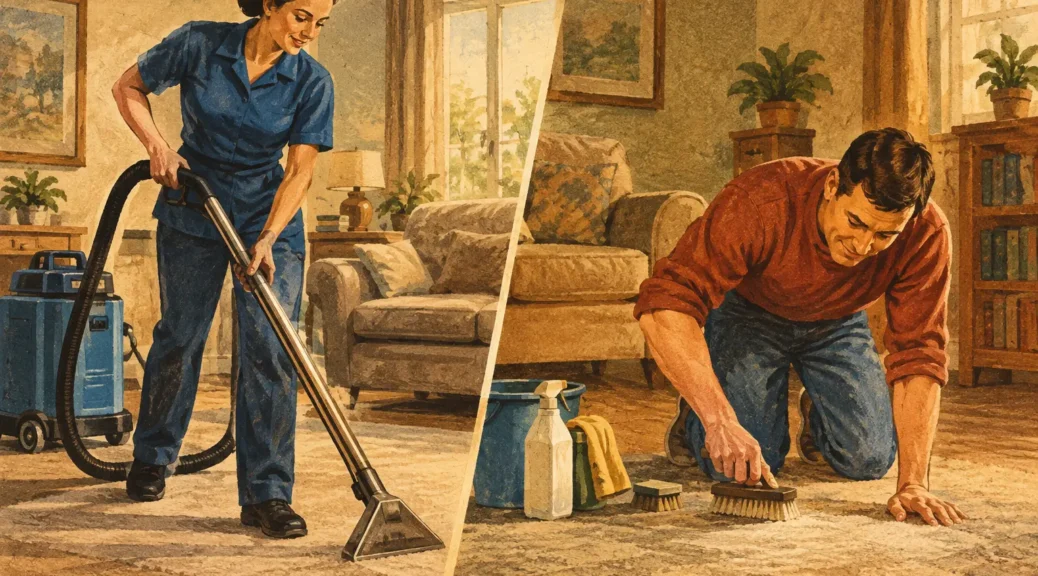
A move-out clean can look manageable until the van is loaded, the keys are due back tomorrow and the oven still has baked-on grease. That is when the professional cleaners versus DIY question becomes less about preference and more about time, standards and risk. The right choice depends on the property, the deadline and what is at stake – especially where a tenancy deposit, sale completion or new occupant is involved.
DIY cleaning can be a sensible way to save money for a small, well-kept flat with plenty of time available. Professional cleaning earns its place when the job is larger, more demanding or tied to a fixed handover date. Here is how to make a practical decision rather than paying for a service you do not need or taking on a job that becomes more expensive in lost time.
Professional cleaners versus DIY: the real difference
The obvious difference is that one option costs cash and the other costs your own time. In practice, it is rarely that simple. A proper deep clean involves preparation, suitable products, equipment, attention to high-use areas and enough hours to finish the work properly. If you are moving house, managing an office relocation or clearing a rented property, cleaning is also only one item on a long list.
Professional cleaners bring a planned process. They work through kitchens, bathrooms, floors, internal glass, skirting boards, touch points and the awkward places that are easy to miss when you are tired. For end of tenancy work, the focus is on leaving the property clean and presentable for inspection, not simply making it look acceptable at a glance.
DIY gives you complete control over the products used and the order of work. It may suit you if you have already cleaned as you packed, the property is empty and in good condition, and you can give the job a full day without rushing. The problem comes when people underestimate the amount of labour involved. A three-hour plan can easily turn into a full weekend once cupboards, appliances, bathrooms and carpets are included.
When DIY cleaning makes good sense
Doing it yourself is not the wrong choice just because a professional service exists. It can be the most cost-effective option for a lightly used room, a regular maintenance clean or a home where you have the time, tools and energy to do the work thoroughly.
It is particularly practical when there is no formal inspection deadline. Homeowners preparing gradually for a sale, for example, can clean one room at a time and deal with small marks as they go. A tenant who has kept on top of cleaning throughout the tenancy may only need to handle final touch-ups, rubbish removal and a wipe-down after furniture has gone.
DIY also works well where the job is clearly defined. Cleaning a fridge, wiping kitchen cabinets or freshening a single bedroom carpet is very different from restoring a whole house after a busy family move. Be honest about the condition of the property before committing. Grease, limescale, pet hair, mould, heavy carpet staining and neglected ovens demand more than standard household products and a quick clean.
The hidden DIY costs are worth considering too. You may need to buy oven cleaner, descaler, degreaser, cloths, gloves, mop heads, carpet solution and waste bags. Hiring or borrowing a carpet machine can add another task, and poor use of strong products can damage surfaces or leave lingering odours. The total may still be lower than booking a cleaner, but not always by as much as expected.
When professional cleaning is the better value
Professional cleaning is usually the stronger option when time is short, the required standard is high or several tasks need doing at once. Tenants facing a check-out inspection often choose it because the cost is easier to plan than the risk of spending days cleaning and still facing deductions for missed areas.
Landlords and letting agents benefit from a consistent standard between occupants. A clean property photographs better, feels more welcoming at viewings and can be turned around faster. For office managers, bringing in cleaners after a move or refurbishment avoids asking staff to handle unpleasant work and helps the new space open on schedule.
The value is not just in the cleaning itself. It is in having trained people, suitable equipment and a team that can complete the work while you deal with removals, keys, utilities, inventory appointments or customers. This matters when several trades are involved. One delayed job can hold up the rest of the handover.
Professional support is also useful for jobs that need a deeper approach. Oven cleaning, carpet cleaning and heavy kitchen or bathroom cleaning take time and specialist products. A cleaner can target stubborn buildup without you having to experiment with harsh chemicals or spend hours scrubbing one appliance.
Cost: compare the full picture, not the hourly rate
DIY appears cheaper because there is no labour charge. But your own time has a value, particularly if you are taking unpaid leave, paying for an extra day of van hire or delaying a tenant or buyer. A rushed clean can also create follow-up costs if you need to return to the property, pay for additional cleaning later or lose part of a deposit.
Professional prices vary according to property size, condition, access, parking, the number of bathrooms, carpets, appliances and the level of cleaning needed. Clear information upfront leads to a more accurate quote. Photos, a room count and details of problem areas are often more useful than simply asking for a price for a ‘deep clean’.
For a straightforward job, DIY may remain the cheapest route. For a larger move-out, the better question is whether a professional service saves enough time, stress and potential rework to justify the cost. That is where value sits.
A better option for moving day: bundle the work
Cleaning is often treated as a separate job, booked after everything else is already arranged. That can mean chasing a removal company, a cleaner and a clearance provider while working to the same deadline. If unwanted furniture, bags of rubbish or garden waste are still at the property, cleaners cannot always get straight to the areas that need attention.
A one-stop approach makes the sequence simpler. Removal or man and van support gets belongings out, house clearance and waste removal deal with items that are not coming with you, and cleaning can follow once the rooms are clear. It reduces the chance of paying two suppliers to wait around or making several sets of arrangements.
Vantage 24/7 Services can combine removals, clearance and cleaning support for customers across Cambridgeshire, with flexible availability for jobs that do not fit neatly into weekday hours. Where more than one service is needed, bundling can also provide better value than arranging each part separately. The key is to explain the full job from the start, including deadlines, access restrictions and anything that needs special attention.
How to choose without overpaying
Start with the condition of the property, not the ideal version of the job in your head. Walk through every room after furniture has been removed and look at the kitchen, bathroom, floors, windows, cupboards and appliances in daylight. If the work is mainly dusting, vacuuming and wiping down, DIY may be perfectly realistic.
Next, work backwards from the deadline. If keys must be handed over at 10am, plan for completion before then rather than hoping to finish that morning. Allow time for waste removal, drying carpets, collecting supplies and any unexpected mess left behind when large furniture is moved.
Finally, decide whether you need certainty. A professional clean gives you a booked time, an agreed scope and fewer jobs competing for your attention. DIY gives you a lower upfront outlay and more control, but only if you can genuinely make the time to do it properly.
A clean handover is one of the last jobs in a move, but it shapes the first impression for whoever walks through the door next. Choose the option that lets you hand over the property with confidence, not exhaustion.