 CALL US NOW
 GET A FREE QUOTE

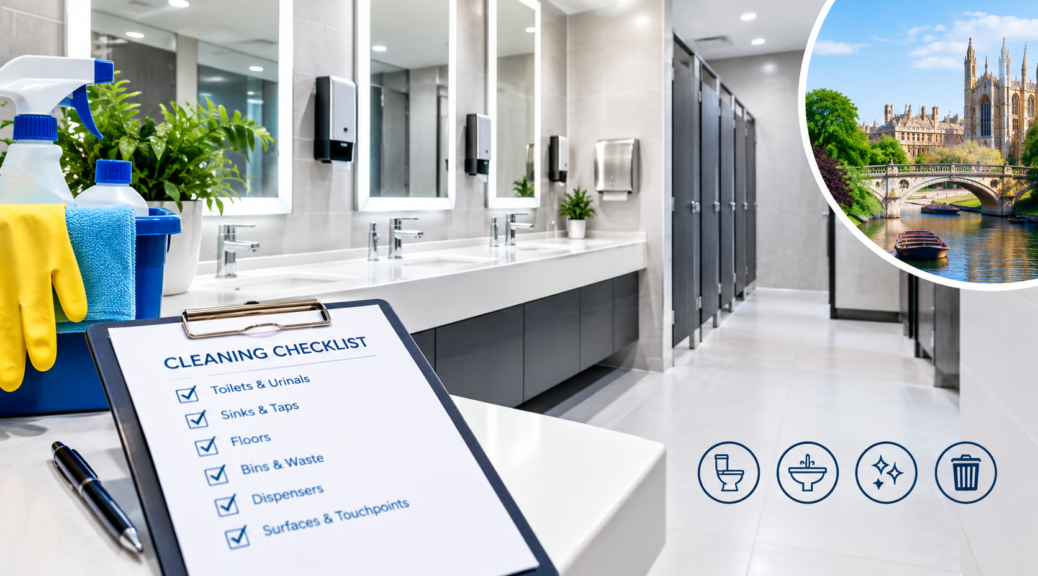
Office washrooms in Cambridge should be cleaned at least once every working day, with busy offices often needing more frequent checks. A good checklist covers toilets, basins, floors, bins, high-touch surfaces and consumables.
A clean washroom supports staff comfort, protects your business’s professional image and helps maintain a hygienic workplace. The exact cleaning schedule should reflect how many people use the washroom, visitor numbers and how heavily the facilities are used.
What should be cleaned daily?
Toilets, basins, floors, bins, mirrors and high-touch surfaces should be cleaned every working day. Consumables should also be checked and replenished before they run out.
A daily commercial washroom cleaning routine should include:
Cleaning and disinfecting toilet bowls, seats, lids and flush handles.
Cleaning urinals and surrounding surfaces where fitted.
Wiping basins, taps, splashbacks and soap dispensers.
Cleaning mirrors, cubicle doors, partitions and door handles.
Sweeping and damp-mopping floors.
Emptying general waste and sanitary bins.
Checking soap, toilet roll, hand towels or hand dryers.
Reporting leaks, blockages, damaged fittings or persistent odours.
The Health and Safety Executive states that workplaces must provide clean toilets and hand basins, with running hot and cold or warm water, soap and a suitable way to dry hands. HSE guidance also says employers should maintain facilities to a high standard, including regular cleaning.
What should be cleaned weekly?
Weekly cleaning should target limescale, grout, less accessible areas and fittings that do not need daily attention. This helps maintain a higher standard between deep cleans.
A weekly washroom checklist can include:
Descaling taps, showerheads and other fittings where limescale builds up.
Cleaning grout, tile edges and corners.
Cleaning behind and around toilets and basins.
Cleaning cubicle locks, hinges and less-visible surfaces.
Checking drains and removing build-up where appropriate.
Reviewing stock levels and reordering cleaning products or consumables.
Weekly descaling and monthly deep cleaning of pipework and sealants are commonly recommended for office washrooms, with ventilation extracts checked periodically. A detailed washroom clean should also cover edges, corners and less accessible areas.
What should be included in a deep clean?
A monthly or periodic deep clean should cover areas that daily cleaning cannot fully address, including grout, behind fittings, vents and detailed sanitising. Busy offices may need this more often.
A washroom deep clean can include:
Deep cleaning grout, seals and difficult corners.
Cleaning behind toilets, basins and other fittings.
Cleaning ventilation grilles and checking airflow.
Treating limescale and mineral build-up.
Cleaning inside dispensers and waste receptacles.
Checking for leaks, damage or drainage problems.
Reviewing whether consumables and dispensers need replacing.
A monthly deep clean is commonly recommended for office washrooms, with more frequent cleaning during busy periods. Deep cleaning should complement, not replace, daily cleaning.
What should be checked for supplies?
Check soap, toilet roll, hand-drying products, bins and sanitary provisions every visit. Running out of essential supplies creates a poor experience for staff and visitors.
Your washroom checklist should include a stock check for:
Toilet paper.
Soap or hand wash.
Paper towels or hand dryer operation.
Sanitary bins and sanitary products, where provided.
Air fresheners or odour-control products, if used.
Cleaning products and replacement liners.
Spare consumables for busy periods.
Supplies should be replenished before they run out, rather than after staff or visitors notice an empty dispenser. HSE guidance also highlights the need for soap and a suitable method of drying hands in workplace washrooms.
How often should washrooms be cleaned?
Most office washrooms need daily cleaning at minimum. High-traffic offices, multi-tenant buildings and sites with frequent visitors may need more than one clean each day.
For a typical office, once-daily cleaning is a sensible minimum. However, offices with high footfall, shared facilities, regular client visits or busy washrooms may need twice-daily cleaning or additional checks during the day.
The right frequency depends on:
The number of employees.
Visitor numbers.
Whether the office is client-facing.
The number of washrooms and cubicles.
Kitchen and refreshment arrangements.
Whether staff work shifts or extended hours.
Any recent illness, spills or maintenance issues.
What should be reported after cleaning?
Cleaners should report leaks, blockages, damage, low stock and persistent odours promptly. Early reporting helps prevent small issues becoming bigger problems.
A good cleaning checklist should include a simple reporting process for:
Leaking taps, toilets or pipework.
Blocked toilets, urinals or drains.
Damaged dispensers, doors or cubicle fittings.
Low or empty consumables.
Broken hand dryers.
Persistent odours.
Slip hazards or spillages.
Damaged flooring, tiles or seals.
Reporting issues quickly helps facilities teams arrange repairs before they affect staff or visitors. Workplace washroom guidance also recommends dealing promptly with leaks, blockages, damage and persistent odours.
How can you create a practical checklist?
Divide tasks into daily, weekly and periodic checks, then adapt the checklist to your office’s usage. Review it regularly as staffing and footfall change.
A simple structure is:
Daily: Toilets, basins, floors, bins, mirrors, high-touch points and consumables.
Weekly: Descaling, grout, corners, less accessible areas and detailed surface cleaning.
Monthly or periodic: Deep cleaning, ventilation checks, detailed grout work and equipment checks.
As needed: Spill response, repairs, restocking and additional visits during busy periods.
For offices with high usage, a daily washroom block should include disinfecting toilets, urinals, seats, sinks and taps; cleaning mirrors and partitions; mopping floors; emptying bins; replenishing consumables; and reporting defects.
FAQs
How often should office washrooms be cleaned?
At least once every working day. Busy offices with high footfall, frequent visitors or shared facilities may need twice-daily cleaning or additional checks.
What should be cleaned every day?
Toilets, urinals, basins, taps, mirrors, floors, bins, door handles, light switches and cubicle surfaces should be cleaned daily. Consumables should also be checked and replenished.
How often should washrooms be deep cleaned?
A monthly deep clean is a sensible baseline for many offices. Busy workplaces may need more frequent deep cleaning, especially where washrooms are heavily used.
What supplies should be checked?
Check toilet roll, soap, paper towels or hand dryers, sanitary bins and any agreed hygiene products. Replenish supplies before they run out.
Should cleaning products be managed under COSHH?
Yes. Where cleaning products or substances hazardous to health are used at work, employers should assess and control exposure risks under COSHH.
How do we get started?
List the washrooms, cubicles and fittings in your office, then create a daily, weekly and monthly checklist. Review it after a few weeks and adjust it based on usage, visitor numbers and any issues reported.