
 CALL US NOW
 GET A FREE QUOTE
Eco-Friendly Commercial Deep Cleaning Solutions for Cambridgeshire Businesses
Eco-friendly commercial deep cleaning helps Cambridgeshire businesses improve hygiene and presentation while reducing unnecessary water use, harsh chemicals, packaging, and waste. The most effective approach combines suitable products, efficient equipment, responsible waste handling, trained cleaners, and a cleaning plan designed around the building.
Green cleaning does not mean accepting lower standards. A professional service should still remove dirt, grease, dust, stains, and build-up from the areas that require detailed attention. The difference is that environmental impact is considered alongside cleanliness, safety, cost, and the needs of employees, pupils, students, customers, and visitors.
Get a Free Quote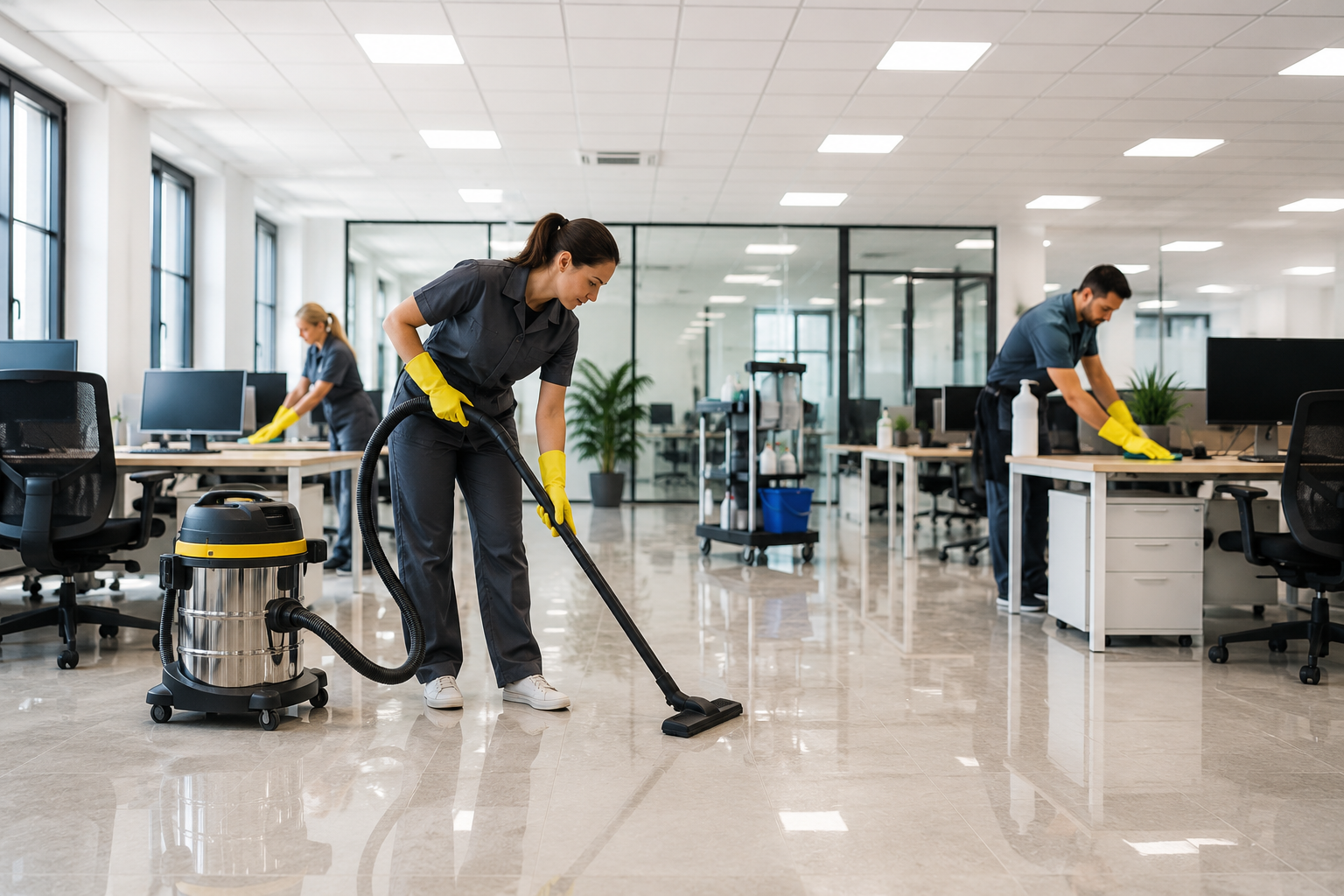
What Is Eco-Friendly Commercial Deep Cleaning?
Eco-friendly commercial deep cleaning is a detailed cleaning service that uses environmentally responsible products and methods where they are suitable for the premises. This may include refillable products, concentrated solutions, lower-water methods, energy-efficient equipment, reusable materials, and waste reduction.
Some providers also offer chemical-free cleaning systems or products made from plant-derived ingredients. However, businesses should ask for specific information rather than relying only on terms such as "green" or "natural". A credible cleaning company should be able to explain which products it uses, how they are diluted, how waste is handled, and whether the method is appropriate for each surface.
Eco-friendly cleaning should also consider safety. The Health and Safety Executive explains that cleaning chemicals can create risks through inhalation, skin contact, eye contact, or incorrect mixing, so products must be selected, stored, and used properly.
Why Green Commercial Deep Cleaning Matters
Eco-friendly deep cleaning can reduce the environmental impact associated with commercial maintenance while helping a business maintain clean and presentable premises. It can also support an organisation's sustainability objectives when cleaning materials, water use, equipment, packaging, and waste are reviewed together.
A responsible service may help reduce:
- Unnecessary use of strong chemical products.
- Single-use plastic packaging.
- Excess water consumption.
- Disposable cleaning materials.
- Poorly separated commercial waste.
- Energy use from inefficient equipment.
The precise environmental benefit depends on the products, machinery, cleaning frequency, building size, and waste arrangements. A supplier should not make unsupported claims about carbon reduction or "chemical-free" results without explaining how those claims are measured.
Choosing Sustainable Commercial Cleaning Products
The right product depends on the surface and the type of contamination. A mild product may be suitable for desks or general hard surfaces, while kitchens, washrooms, floors, and industrial areas may require different formulations or specialist processes.
When comparing commercial cleaning providers in Cambridgeshire, ask whether they can provide:
- Product names and safety information.
- Instructions for safe dilution and storage.
- Evidence of refillable or concentrated packaging.
- Information about biodegradable or environmentally preferable products.
- A plan for dealing with contaminated or specialist waste.
- Details of how cleaning products are kept away from pupils, staff, customers, and visitors.
Eco-friendly products are not automatically harmless, and a natural product is not necessarily suitable for every material. Effective cleaning requires correct dosage, contact time, application, and removal. Using too much product can create residue, increase costs, and reduce the environmental benefits.
Reducing Water and Energy Use
Water-saving methods can be useful in offices, schools, universities, warehouses, and other commercial buildings. Microfibre systems, controlled-use sprays, low-moisture carpet cleaning, and efficient floor machines may reduce the volume of water required for some tasks.
Equipment should be selected according to the surface and the level of dirt. A low-moisture method may be useful for some carpets because the area can dry more quickly, while heavily soiled floors may require a more intensive process.
Energy efficiency is also relevant. Battery-powered or efficient equipment may reduce energy use during cleaning, but the overall benefit depends on how the equipment is charged, maintained, and used. Some cleaning companies serving Cambridge and Cambridgeshire promote chemical-free systems, water-saving methods, energy-efficient equipment, refillable products, and digital audits as part of their sustainability approach.
Commercial Deep Cleaning for Schools in Cambridgeshire
Deep cleaning for schools in Cambridgeshire should be planned around pupils, staff, timetables, safeguarding arrangements, and the surfaces used every day. Classrooms, corridors, dining areas, toilets, halls, staff rooms, changing facilities, and shared equipment may all require different cleaning specifications.
Schools may benefit from an eco-friendly plan that includes:
- Low-odour products for suitable areas.
- Careful cleaning of desks, door handles, taps, and shared surfaces.
- Carpet and hard-floor maintenance.
- Kitchen and dining-area cleaning.
- Washroom cleaning and consumable checks.
- Responsible handling of general and recyclable waste.
- Cleaning during evenings, weekends, or school holidays.
A deep clean should not disrupt lessons or create avoidable risks from wet floors, fumes, equipment, or unsecured products. The cleaning company should agree access arrangements and drying times with the school before work begins.
Schools should also request a written cleaning specification. Educational cleaning providers in the Cambridge area commonly tailor cleaning arrangements to the school's requirements and budget, while services may include contract cleaning, janitorial support, window cleaning, waste management, and recycling.
Commercial Deep Cleaning for Universities in Cambridgeshire
Deep cleaning for universities in Cambridgeshire requires a larger and more varied plan because university estates may include lecture theatres, libraries, laboratories, offices, student accommodation, sports facilities, cafés, staircases, and communal areas.
An eco-friendly university cleaning programme should separate ordinary areas from locations requiring specialist controls. Laboratories, healthcare-related teaching spaces, catering areas, workshops, and accommodation may have different risks and cleaning requirements.
Important considerations include:
- Cleaning around lectures, examinations, and events.
- Managing large volumes of student and visitor traffic.
- Cleaning high-touch points in communal areas.
- Using suitable methods for libraries and sensitive equipment.
- Providing carpet, floor, washroom, and upholstery cleaning.
- Coordinating waste and recycling collections.
- Protecting personal belongings in student accommodation.
A university may need a combination of regular cleaning, periodic deep cleaning, specialist floor care, and responsive cleaning after spills or events. Providers in the region advertise services for schools, colleges, universities, student accommodation, and other educational premises, but the final scope should be based on a site assessment rather than a generic package.
Commercial Deep Cleaning for Offices
Deep cleaning for offices focuses on areas that routine cleaning may not reach. These can include carpets, upholstery, skirting boards, internal glass, blinds, kitchen appliances, washrooms, meeting rooms, high-level surfaces, and shared equipment.
An eco-friendly office deep clean may use:
- Refillable surface-cleaning products.
- Microfibre cloths that can be laundered and reused.
- Low-moisture carpet methods where suitable.
- Controlled dosing to reduce product waste.
- Energy-efficient vacuum cleaners and floor machines.
- Separate waste and recycling arrangements.
Frequently touched surfaces should be considered in the cleaning specification. These can include door handles, light switches, taps, shared telephones, lift buttons, and kitchen handles. Guidance on cleaning specifications recommends giving high-frequency touch points particular attention.
Timing is also important. Evening or weekend cleaning may reduce disruption, but the building must be left safe and adequately ventilated. If carpets or floors are cleaned with moisture, the cleaning company should explain how long drying may take.
Commercial Deep Cleaning for Warehouses in Cambridgeshire
Deep cleaning for warehouses in Cambridgeshire must account for large floor areas, vehicle movements, loading bays, racking, dust, packaging materials, spillages, and restricted access. Warehouses may need a more industrial cleaning approach than offices or schools.
A warehouse deep clean may include:
- Mechanical scrubbing of hard floors.
- Removal of dust from accessible racking and ledges.
- Cleaning loading bays and entrance areas.
- Treatment of oil, grease, or other suitable spillages.
- Waste and packaging removal.
- Cleaning welfare facilities and staff areas.
- High-level cleaning where safe access equipment is available.
Eco-friendly warehouse cleaning should not compromise safety. Before work starts, the business and contractor should agree pedestrian routes, vehicle controls, isolation requirements, wet-floor procedures, and the safe use of machinery.
High-level cleaning and machine scrubbing may cost more than general cleaning because they can require specialist equipment, additional labour, and extra preparation. Published UK cleaning guides give different rates for general warehouse work and specialist machine or high-level cleaning, which shows why a site survey is important.
Areas We Cover
Vantage 24/7 Services / Man and Van Helps provides removals, waste clearance, garden clearance, and cleaning — including end of tenancy and deep cleaning — right across Cambridgeshire and into Suffolk, Bedfordshire, Norfolk, and Essex. Wherever you see a town listed below, it's covered for our full range of services, not just removals.
Our Service Area
From our base in Huntingdon, we cover towns and villages across Cambridgeshire and the surrounding counties for removals, man and van work, waste and garden clearance, and cleaning services such as end of tenancy and deep cleaning.
Cambridgeshire Huntingdon
Cambridgeshire St Neots
Cambridgeshire Ely
Cambridgeshire Peterborough
Cambridgeshire Newmarket
Suffolk Sandy
Bedfordshire Saint Ives
Cambridgeshire Sawtry
Cambridgeshire Mildenhall
Suffolk Lakenheath
Suffolk Alconbury
Cambridgeshire Biggleswade
Bedfordshire Feltwell
Norfolk Warboys
Cambridgeshire Ramsey
Cambridgeshire Bar Hill
Cambridgeshire Waterbeach
Cambridgeshire Wisbech
Cambridgeshire March
Cambridgeshire Chatteris
Cambridgeshire Soham
Cambridgeshire Haverhill
Suffolk Saffron Walden
Essex Sawston
Cambridgeshire Whittlesey
Cambridgeshire Yaxley
Cambridgeshire Godmanchester
Cambridgeshire Bury St Edmunds
Suffolk Bedford
Bedfordshire
Don't see your town? Get in touch — we regularly travel further afield for our clients.
Managing Waste Responsibly
Waste management is an important part of sustainable commercial cleaning. A cleaning company may collect general waste, cardboard, paper, packaging, food waste, or recyclable materials, but the exact arrangement depends on the business and local collection system.
Businesses should confirm:
- Which waste streams the contractor can handle.
- Whether waste is separated at the point of collection.
- Where waste is taken.
- Whether hazardous or specialist waste is excluded.
- Whether waste transfer documentation is provided when required.
- Whether cleaning materials are supplied in reusable or refillable containers.
A cleaning company should never mix waste streams simply to make collection quicker. Schools, universities, warehouses, and larger offices may need a clear waste plan involving facilities managers, staff, contractors, and existing recycling arrangements.
How Much Does Commercial Deep Cleaning Cost?
There is no single Cambridgeshire price for an eco-friendly commercial deep clean. The final quotation depends on floor area, condition, access, cleaning frequency, surface types, equipment, working hours, waste requirements, and whether specialist services are needed.
Published 2026 UK pricing guides commonly place general commercial cleaning at approximately £15–£30 per cleaner per hour, while deep cleaning may be around £30–£45 per cleaner per hour. Specialist warehouse work, high-level cleaning, and machine floor care may be higher. These are guide prices rather than guaranteed Cambridgeshire quotations.
A professional site survey is the best way to receive an accurate price. Ask whether VAT, equipment, products, waste removal, travel, out-of-hours work, and carpet or floor treatment are included.
Checking Environmental Claims
Businesses should check environmental claims before selecting a cleaning provider. Terms such as "eco-friendly", "green", "sustainable", and "chemical-free" can mean different things between companies.
Ask for practical evidence, such as:
- Product safety data and usage instructions.
- A written environmental policy.
- Information about refill systems and packaging.
- Waste and recycling procedures.
- Equipment maintenance records.
- Staff training details.
- Any relevant certification or independently verified standard.
A company's environmental performance should be judged across the whole service, not only by the label on a cleaning bottle. A concentrated product may reduce packaging, but it still needs to be used correctly. Similarly, a reusable cloth may reduce disposable waste if it is washed and managed properly.
Creating a Green Commercial Cleaning Plan
A successful eco-friendly deep-cleaning programme begins with a site assessment. The cleaning contractor should identify high-use areas, sensitive surfaces, contamination risks, access limitations, and the tasks that are not covered by routine cleaning.
The plan should then set out:
- The areas to be cleaned.
- The products and methods to be used.
- The required equipment.
- Cleaning times and access arrangements.
- Waste and recycling responsibilities.
- Safety controls and drying times.
- Quality checks and reporting.
- The recommended maintenance schedule.
Digital audits and written reports may help facilities teams monitor whether the agreed tasks have been completed. Some commercial cleaning providers use digital reporting to support audits and communication with clients.
Questions to Ask Before Booking Commercial Deep Cleaning
Before choosing an eco-friendly commercial cleaning company in Cambridgeshire, ask:
- Do you have experience with our type of premises?
- Can you clean outside normal working hours?
- Which areas are included in the deep-cleaning quote?
- What products and equipment will you use?
- Can you provide safety information for the products?
- How do you reduce water, packaging, and waste?
- Are carpet, window, upholstery, and floor treatments included?
- Do you have suitable insurance?
- How will you protect equipment, furniture, and sensitive areas?
- Will you provide a written report after the clean?
These questions help prevent misunderstandings and make it easier to compare providers on value, safety, environmental responsibility, and service quality. You can put them to our team directly when you get in touch.
Final Thoughts
Eco-friendly commercial deep cleaning can help Cambridgeshire businesses maintain cleaner premises while making more responsible decisions about products, water, equipment, packaging, and waste. The most suitable solution is not necessarily the one making the biggest environmental claim; it is the one that provides clear methods, safe procedures, reliable results, and measurable practical improvements.
Schools, universities, offices, and warehouses each require a different cleaning specification. A site survey, written quotation, and carefully planned maintenance programme can help ensure that the service is effective without creating unnecessary disruption or expense.
We work with businesses across Cambridgeshire — you can find us on Google Maps or contact us to arrange a site survey.
Frequently Asked Questions
How Much Does Commercial Deep Cleaning Cost in Cambridgeshire?
A general 2026 UK guide price is approximately £30–£45 per cleaner per hour for deep cleaning. The final Cambridgeshire price depends on the premises size, condition, access, equipment, products, floor treatments, waste removal, and working hours.
How Much Does Commercial Deep Cleaning Cost of School in Cambridgeshire?
A school deep-cleaning quotation cannot be confirmed without the building size and cleaning specification. As a guide, budget around £30–£45 per cleaner per hour, with larger schools potentially requiring a fixed project quotation or ongoing monthly contract. Some published UK guides place school cleaning contracts at approximately £500–£2,000 or more per month, depending on the service level.
How Much Does Commercial Deep Cleaning Cost of office in Cambridgeshire?
For an office, an indicative deep-cleaning rate is approximately £30–£45 per cleaner per hour. A small one-off office project may cost several hundred pounds, while larger offices requiring carpet cleaning, floor treatment, out-of-hours work, or multiple cleaners will cost more.
How Much Does Commercial Deep Cleaning Cost of University in Cambridgeshire?
There is no standard university deep-cleaning price because campuses vary significantly in size and use. A practical guide is £30–£45 per cleaner per hour for general deep cleaning, with laboratories, student accommodation, large lecture spaces, specialist floors, and out-of-hours work priced separately. A university normally requires a site survey and formal quotation.
How Much Does Commercial Deep Cleaning Cost of warehouses in Cambridgeshire?
General warehouse cleaning may cost approximately £25–£40 per cleaner per hour, while high-level cleaning, machine scrubbing, or specialist floor work may reach around £40–£60 per cleaner per hour. Large warehouses are often priced by project because floor area, racking, access, vehicle movements, and the type of dirt can significantly affect the total.
Does eco-friendly cleaning cost more?
Not always. Concentrated products, efficient equipment, and reusable materials may reduce some ongoing costs, but specialist equipment, certified products, additional training, or out-of-hours work may increase the quotation. Compare the full specification rather than choosing solely by the hourly rate.
Can green cleaning remove heavy industrial dirt?
It may be possible, but the correct method depends on the substance, surface, and safety requirements. Oil, grease, chemical residues, and unknown spillages should be assessed before work starts, and specialist cleaning may be required.
How often should a business arrange an eco-friendly deep clean?
The frequency depends on building use, foot traffic, surface types, industry requirements, and the standard maintained by routine cleaning. Many organisations use periodic deep cleaning to reset neglected areas and then continue with a regular service to maintain the result.
Is eco-friendly cleaning suitable for schools and universities?
It can be suitable when products and procedures are selected for the specific setting. Cleaning should be scheduled around pupils, students, staff, visitors, equipment, ventilation, and safe drying times, with stronger controls for laboratories, kitchens, and specialist areas.